



Staytes Farm: The Bucolic Idyll That Gives Burford Its Magical Charm
WORDS BY Charlotte Metcalf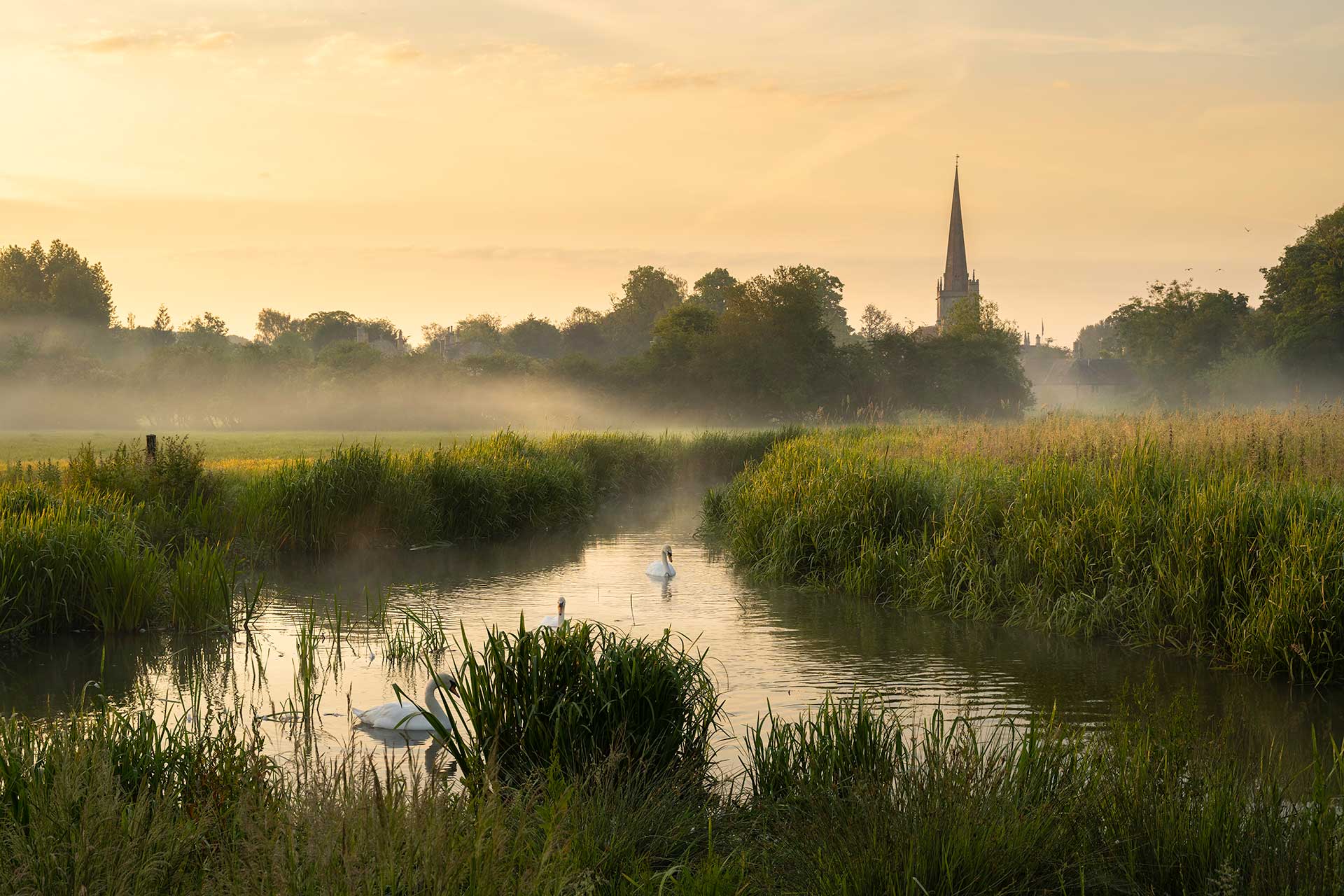
In 2009 Forbes, the magazine for CEOs and billionaires, ranked Burford in the Oxfordshire, Cotswolds, with a population of around 1,000, as among the most idyllic places to live, not just in England but in the whole of Europe.
In 2009 Forbes, the magazine for CEOs and billionaires, ranked Burford in the Oxfordshire, Cotswolds, with a population of around 1,000, as among the most idyllic places to live, not just in England but in the whole of Europe.
The first reference to the town was in the Domesday Book of 1086 but historical accounts suggest there were settlements here as far back as 685 AD. Today, this medieval market town still holds a mystical allure. Even from far away, the tall, thin spire of its church, which dates back to 1175, can be seen, soaring skyward gracefully from the folds of the surrounding hills.
Burford's one main street, flanked by ancient buildings, descends steeply from the A40 and the Coln Valley at one end to a bridge over the river Windrush at the other. Just to the left of the bridge is an exquisite meadow, bright with wildflowers in spring, green and lush with long grasses in summer. In autumn it is a blaze of gold, low sunshine glinting on its streams and puddles, while frost sparkles beyond lacy bare branches in winter.
These lovely meadows are home to Staytes Farm, a 600-acre site as ancient as the town itself. Once there was a mill on the riverbanks where the villagers used to come to grind their corn. There was a quarry providing the grey stone that gives the surrounding villages their beauty and character. There was a weir too, for the Windrush continues its journey through Oxfordshire and Gloucestershire, past the medieval priory that in recent years has become a magnificent private home. Some of the original farm buildings still stand; great, solid barns rising up as a reminder of the farm's thriving past.
Today the Mills family owns the farm and it's full of swans, birds, butterflies and the occasional flock of sheep or cows, still a bucolic idyll worthy of a Constable or Gainsborough painting.
Across from Staytes Farm on the High Street is Burford's original school, founded in 1575. It houses the handful of boarders who attend the school, now across the A40 the other end of the town. In all seasons, schoolchildren can be seen happily strolling and playing along the Windrush or just lounging on its banks as the river meanders by. Even in the bleak midwinter month of February, a walk here lifts the heart as great white clusters of snowdrops thrust up and herald spring.
Yet here, on the edge of Burford, itself registered as an Area of Outstanding Natural Beauty, are meadows that are redolent of that lost world, a world far from the madding crowds and pressures of hectic urban life.
The town offers a variety of shops, pubs and hotels, most of which have remained resolutely independent (the town boasts the country's oldest chemist). It has a baker, a renowned butcher, cheesemonger and a small supermarket. There are numerous antique shops, art and craft galleries. There are excellent clothing outlets from The Oxford Shirt Company to Elm of Burford, specialising in country clothing. There's even the Madhatter's Bookshop. Boutique hotels offer cosy restaurants in the winter, complete with crackling log fires, and lovely gardens in which to eat in the summer. And of course there's St. John the Baptist church to visit, with its magnificent stained-glass windows and that soaring spire.
The Burford Garden Centre, just outside town, is a hugely popular destination that sells everything from trees, plants, bespoke garden sheds and shepherd's huts, to food, clothing, furniture, homeware, toys, books, skincare and gifts.
Yet Burford's secret lies not so much in its multiple amenities but in its underlying sense that you have stepped back in time. Staytes Farm harks back to the England of Beatrix Potter and the countryside of Laurie Lee's Cider with Rosie (albeit set further west in Gloucestershire), Thomas Hardy or Keats's poem Ode to Autumn. Staytes Farm's riverbanks could be home to the beavers in C.S. Lewis's The Lion the Witch and the Wardrobe or the otters in Gavin Maxwell's Ring of Bright Water. Its meadows could be the setting for many a towering hay wain and it's easy to imagine horses and carts rumbling towards it from High Street.
SHARE: